I have been longing for Jahja Ling’s return to Heinz Hall. In 2004, his last moment substitute of Lorin Maazel for Mahler Sym. No. 5 was one of the best concerts I’ve ever heard from PSO. In fact, it was so splendid that I couldn’t find the same connection one year later in Chicago symphony center.
Yesterday’s program was interesting, not only because all three pieces were written when the composers were young, but also those pieces, with their unusual mood and maturity, surpass the definition of early stage.
The little G-minor symphony was written when Mozart was 17 years old. Although the works was completed in Salzburg after Mozart returned from Vienna, its expressiveness theme and thematic development is more than what cheerful local styles asked for. Ling pushed the orchestra in a tense fast tempo, but with less contrast. The effect of tremolo at the beginning carried a sense of inescapability, but the looming menace and pressing anger couldn’t be found, as if it was notified in advance that those fierce winds would calm down soon. Perhaps, in Ling’s mind, the romantic crisis is nothing but a foray of expressiveness within the frame of rococo style.
The slow movement, on the contrary, was performed at a slower-tempo side, even though it is actually andante. Unfortunately, PSO were not well equipped with refinery and delicacy for Mozartean manner. The wind section sang briskly while string section projected a darker but nocturnal mood.
The vigorous Minuet provided an echo for the first movement as if the lingering residue of storms had come back. But it was soon interrupted by the rustic trio which was performed with even brighter color. The cyclic arrangement of mood did surprised me that Mozart, at his early age, already tried to keep coherence within the structure, even though it meant to end music without relief. Still, PSO smoothed the inundating changes in moods between pensiveness and vivacity, thus reached a lukewarm, placid little G-minor.
But Ling quickly revealed what he and PSO could achieve when the right piece was chosen. Richard Strauss is a natural fit for PSO, maybe because of the tradition which can be traced back in 1904 when the composer himself visited the orchestra.
The beginning about the silent bedroom and childhood memory was almost painting-like vivid, but it was the transfiguration which took place soon after that showed the orchestra’s responsiveness and energy. PSO sounds like a giant for heroic pieces with splendid orchestration, and Richard Strauss brings the best of instrumental colors.
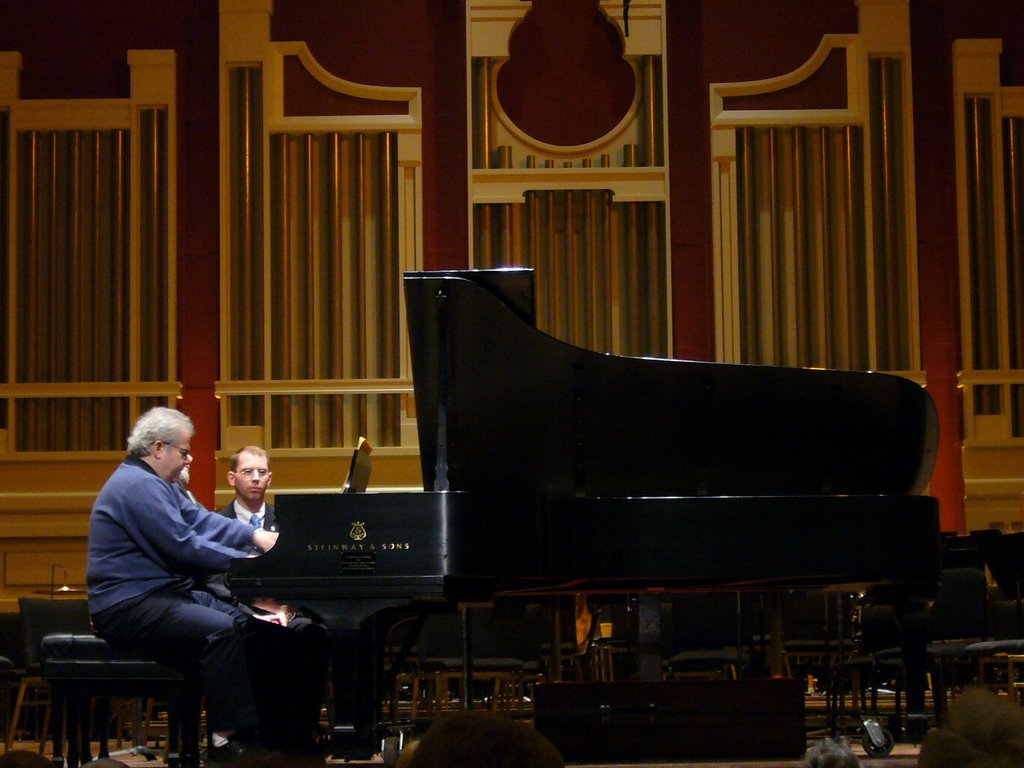
The highlight of the whole concert was definitely Emanuel Ax, who, in his top form, inserted his personal Romanism to the thought-provoking Brahms No. 1 piano concerto. In the first movement, he was resourceful, with both the clarity that defined every melody lines and the strength that rivaled turbulent orchestration. In the solo part, he immersed the keyboard with such Brahmsian deep brood that balanced the first dramatic theme.
The second slow movement inherited Beethoven’s spirit: unleashed breadth, fancy chromaticism, a strong sense of yearning, only deeper and wider that are inborn from the pensive young composer. While Ax kept metallic texture in the virtuosic section in the first movement, his interpretation is more Chopin-approach in the slow movement. It is true that Brahms’ own descriptive words indicate sacredness; However Ax colored the serene melodies with less pondering and more cantabile lyricism. The effect was simply astonishing and indescribable: For a moment, I felt that the Heinz hall was empty except the piano sound, rounded, at one end was the two hands, at the other were deeply touched a full house of audience and the orchestra.
Emanuel Ax is scheduled to return to Heinz Hall next April to play Chopin No. 2 Piano Concerto.
Yesterday’s program was interesting, not only because all three pieces were written when the composers were young, but also those pieces, with their unusual mood and maturity, surpass the definition of early stage.
The little G-minor symphony was written when Mozart was 17 years old. Although the works was completed in Salzburg after Mozart returned from Vienna, its expressiveness theme and thematic development is more than what cheerful local styles asked for. Ling pushed the orchestra in a tense fast tempo, but with less contrast. The effect of tremolo at the beginning carried a sense of inescapability, but the looming menace and pressing anger couldn’t be found, as if it was notified in advance that those fierce winds would calm down soon. Perhaps, in Ling’s mind, the romantic crisis is nothing but a foray of expressiveness within the frame of rococo style.
The slow movement, on the contrary, was performed at a slower-tempo side, even though it is actually andante. Unfortunately, PSO were not well equipped with refinery and delicacy for Mozartean manner. The wind section sang briskly while string section projected a darker but nocturnal mood.
The vigorous Minuet provided an echo for the first movement as if the lingering residue of storms had come back. But it was soon interrupted by the rustic trio which was performed with even brighter color. The cyclic arrangement of mood did surprised me that Mozart, at his early age, already tried to keep coherence within the structure, even though it meant to end music without relief. Still, PSO smoothed the inundating changes in moods between pensiveness and vivacity, thus reached a lukewarm, placid little G-minor.
But Ling quickly revealed what he and PSO could achieve when the right piece was chosen. Richard Strauss is a natural fit for PSO, maybe because of the tradition which can be traced back in 1904 when the composer himself visited the orchestra.
The beginning about the silent bedroom and childhood memory was almost painting-like vivid, but it was the transfiguration which took place soon after that showed the orchestra’s responsiveness and energy. PSO sounds like a giant for heroic pieces with splendid orchestration, and Richard Strauss brings the best of instrumental colors.
The highlight of the whole concert was definitely Emanuel Ax, who, in his top form, inserted his personal Romanism to the thought-provoking Brahms No. 1 piano concerto. In the first movement, he was resourceful, with both the clarity that defined every melody lines and the strength that rivaled turbulent orchestration. In the solo part, he immersed the keyboard with such Brahmsian deep brood that balanced the first dramatic theme.
The second slow movement inherited Beethoven’s spirit: unleashed breadth, fancy chromaticism, a strong sense of yearning, only deeper and wider that are inborn from the pensive young composer. While Ax kept metallic texture in the virtuosic section in the first movement, his interpretation is more Chopin-approach in the slow movement. It is true that Brahms’ own descriptive words indicate sacredness; However Ax colored the serene melodies with less pondering and more cantabile lyricism. The effect was simply astonishing and indescribable: For a moment, I felt that the Heinz hall was empty except the piano sound, rounded, at one end was the two hands, at the other were deeply touched a full house of audience and the orchestra.
Emanuel Ax is scheduled to return to Heinz Hall next April to play Chopin No. 2 Piano Concerto.