Showing posts with label Mahler. Show all posts

Saturday, April 08, 2006

Song of the Earth (Stanza in both English and Chinese)


1
悲歌行 李白

悲来乎,悲来乎。
主人有酒且莫斟,听我一曲悲来吟。
悲来不吟还不笑,天下无人知我心。
君有数斗酒,我有三尺琴。
琴鸣酒乐两相得,一杯不啻千钧金。

悲来乎,悲来乎。
天虽长,地虽久,金玉满堂应不守。
富贵百年能几何,死生一度人皆有。
孤猿坐啼坟上月,且须一尽杯中酒。

悲来乎,悲来乎。
凤凰不至河无图,微子去之箕子奴。
汉帝不忆李将军,楚王放却屈大夫。

悲来乎,悲来乎。
秦家李斯早追悔,虚名拨向身之外。
范子何曾爱五湖,功成名遂身自退。
剑是一夫用,书能知姓名。
惠施不肯干万乘,卜式未必穷一经。
还须黑头取方伯,莫谩白首为儒生。


Tale of Sorrowful Song --- Li Bai

Sorrow comes; sorrow comes
Host has wine; pour not yet
Listen to my singing a sorrowful song
Sorrow approaches, neither sob nor laugh
This world - nobody knows my heart
You have several measures of wine,
I have three-foot lute
Lute playing complements happy drinking
One drink equals thousand taels of gold

Sorrow comes; sorrow comes
Everlasting as the heaven and the earth
Yet roomful of gold and jade shall not last
Hundred years of wealth amounts to what?
Everyone lives and dies only once
Lonely ape sits, howls the moon over the grave
Must empty this cup of wine in one gulp.

2
效古秋夜长 钱起 
 
秋汉飞玉霜,北风扫荷香。
含情纺织孤灯尽,拭泪相思寒漏长。
檐前碧云静如水,月吊栖乌啼鸟起。  
谁家少妇事鸳机,锦幕云屏深掩扉。
白玉窗中闻落叶,应怜寒女独无衣。
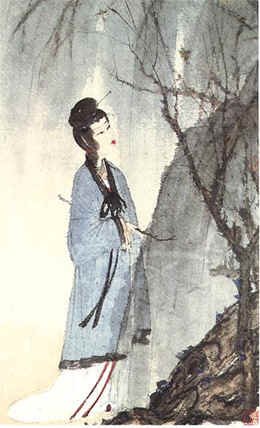
Imitation of Old Poem: Long Autumn Night ---Qian Qi

Autumn sky, jade-like frost drifting
Northerly wind carries lotus fragrance
With love, weaving till the lonely lamp fades
Wipe tears, fond memory, long cold night
Eaves edge, blue clouds pure like water
Rising moon, roosting birds caw; geese soar.
Whose young wife is weaving love birds on her loom?
Deeply concealed by silk curtain and inlaid screen
Listening to falling leaves by the white jade window
Pity the woman, chilled and alone without company

3
宴陶家亭子 李白

曲巷幽人宅 高门大士家
池开照胆镜 林吐破颜花
绿水藏春日 青轩秘晚霞
若闻弦管妙 金谷不能夸

Banquet at Tao’s Family --- Li Bai

PavilionWinding path; private residence in quietude
Tall gate; great scholar’s home
Open pond mirrors reflection
Protruding forest trees intersperse with colorful flowers
Turquoise water hides the Spring sun
Green room camouflages evening amber
If strings and woodwinds are delightful to hear,
Unmatched by “golden valley”

4
采莲曲 李白
若耶溪边采莲女,笑隔荷花共人语。
日照新妆水底明,风飘香袖空中举。
岸上谁家游冶郎,三三五五映垂杨。
紫骝嘶入落花去,见此踟蹰空断肠。

Lotus-plucking Song --- Li Bai

By Ruo-Ye* Brook, lotus-picking girls
Laughter and chatters among lotus flowers,
Sun shines on the painted beauty – clear in the water
Breeze lifts fragrant sleeves in the air
At the bank, who are the wandering young men
Gathering in threes and fives by the willows
Purple horses neighing pass, flowers fallen
Witnessing this, troubled and lament in vain

5

春日醉起言志 李白
处世若大梦,胡为劳其生。
所以终日醉,颓然卧前楹。
觉来盼庭前,一鸟花间鸣。
借问此何时,春风语流莺。
感之欲叹息,对酒还自倾。
浩歌待明月,曲尽已忘情。

Feelings upon Awakening from Drunkenness on a Spring Day --- Li bai

Earthly life resembles big dream
Pointless slaving oneself
Hence drunken all day
Crouching, disheartened, at the front pillar
Stare before the courtyard upon awakening
A bird sings among the flowersAsk: what season is this?
The nightingale speaks of Spring breezes
Moved, one desires to sigh
Facing the wine, pour for oneself
Singing loudly, awaiting the moon
Song ends, feelings forgotten

6
Staying at Teacher’s Mountain Retreat, Awaiting a Friend in Vain ---Meng Haoran

Dusk sun passes the western peak
Valleys have suddenly darkened
moon above pine trees chills the night
wind, brook, filled with clear sound
woodcutters are almost all home
birds, in mist, are roosting
The man expected to stay the night has not yet come
lonely lute awaits at rattan trail

送别 王维
下马饮君酒,问君何所之。
君言不得意,归卧南山陲。
但去莫复闻,白云无尽时。

Farewell---Wang Wei

Dismount horse, drink your wine
Ask you: "Where to?"
You say: "At odds with the world
Return to rest by the South Hill."
Please go. Ask no more.
Endless, the white clouds.

山中送别 王维
山中相送罢, 日暮掩柴扉。
春草明年绿, 王孙归不归。

Farewell in the Mountain ---Wang Wei
Bid each other farewell in the mountain
Closing wooden gate at dusk
Spring grass green again next year
Will the honored friend return?

Das Lied von der Erde (Song of the Earth)


Pittsburgh Symphony Orchestra hasn’t performed Mahler’s “Das Lied von der Erde” or Song of the Earth (SOE) for almost 30 years. Sir Andrew Davis said that was actually William Steinberg’s favorite piece. If fact, Mr. Steinberg chose SOE in his last farewell concert and the music ended at the melancholy singing from mezzo-soprano of “forever… forever.”

Pittsburgh Symphony Orchestra must remember such a moving moment (at least some of the members have gone through Steinberg, Previn, Maazel and Jansons regimes), and the night of Song of the Earth reminded me the livelong dream of contemplation about death and life.

When Mahler speaks in a soft voice, the music is celestial and otherworldly. The motive from the sighing harp echoed by the demurring brass and haunting percussion in the last movement “Parting” consummates all the feelings expressed in the previous movements. Sir Andrew Davis brought out such nuance and delicacy from PSO that the audience stayed silent long after the last music note.

The tenor Jason Collins faced some difficult jobs in singing against roaring orchestra. Mostly I couldn’t hear him clearly due to my seat position. The third movement “Of Youth” showed his vigorous voice and nimble tonality, but Mahler’s SOE is a symphony highlighting mezzo-soprano (or baritone in Bernstein’s case). Jane Irwin won 1991 Decca Kathleen Ferrier Prize and any mezzo-soprano has to face with the legend historical performance by Ferrier. Luckily Jane has a better sound stage and her voice is soft and smooth, with a sense of stillness lingering around, just perfect for decaying stark atmosphere in “The Lonely One in Autumn”. Her singing of the “Parting” was unforgettable. It was not deep sorrow feeling in the end. She instilled the sweet sorrow, as if it resulted from a combination of resignation of inevitable death and a willingness of accepting death as part of life cycle. In the end, she sang the last “Ewig” with tender smiles, and I did wish at that moment it would mean “forever… forever”.

The concert proves what I have believed about Mahler. Mahler can hardly be experienced in canned music format. The dynamic, the scale, the orchestration can only be fully enjoyed live. PSO’s Mahler No. 5 almost blew me out of the seat two years ago. Then Barenboim’s last conducting of Mahler in Chicago showed restrains and balance for the same piece. Ferrier’s parting under Bruno Walter’s baton missed the misty echoing from orchestra in DECCA’s CD, it was PSO and Jane Irwin (mezzo soprano) that brought me back to realize the greatness of the masterwork.

Thursday, April 06, 2006

Lenny's Mahler


It always amazes me to realize the importance of interpreters, something unique for music appreciation only. Mahler composed his works in great detail and instructions so that there is almost no middle land between keeping strictly to music notes and straying far away. Stravinsky prefers the former and hates unwanted personalization from interpreters, but unfortunately the greatness of the music lies in the infinite ways of exploration, understanding and recreation. For me, Boulez and Bernstein show two extremes with regard to Mahler’s world. It is the latter composer who approached Mahler with more Mahlerian sensitivity and thereby conquered me.


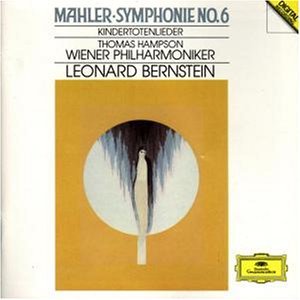
I don’t have his last complete Mahler cycle, but own a few. The Symphony No. 6 is acquired yesterday, which I haven’t had the chance to listen that much. It is already a wonder for Lenny Bernstein to conduct Mahler at his age when these live recordings were made, not to mention this cycle is the most dynamic, most vigorous and most emotional one. In my mind, although he may have distorted more notes than other conductors, no one, in terms of music character, is closer than he to Mahler.


I take extreme freedom to use Mahlerian which is hard to explain in a few sentences. It can be fragile and brittle, boisterous and rough, heroic and lofty. No matter what feeling it is, it bursts out without restraint. From my point of view, music from Mozart is so wholesome and chaste that it cannot be the final resort for peace and serenity. It just sounds too beautiful to be real. Mahler murmurs, shouts, contends, retreats and cries. His music embodies a heroic statue with all human weakness, thus listening experience becomes mutual consoles, with equality.

Mahlerian concept is the key to accept Bernstein’s boldness. There is no such too much emotion involved to perform extremely emotional music; and there is no overloading conducting for overloading music. It is a final outlet and a retreat so that no strong feelings should be inhibited. Lenny makes the Allegro of the first movement of Resurrection into a heroic trudge, he opts a much faster tempo for funeral march in Titan which sounds humorous and idiosyncratic. He chooses a boy to substitute a soprano in the finale of 4th symphony, and No. 6 Symphony, he blows down the audience by strokes of “hammer” with no mercy.


Also, an old article written three years ago.
_______________________________________________
聆听Mahler确实不是一件简单的事情,我首先必须承认我的一个缺点:每次聆听Mahler都会走神。在宏大冗长的音流中flounder应该不是罪过,但缺乏心灵的契合确是不得否认的事实。

Mahler说,我的时代终会到来。上个世纪末全世界的乐团都在拥簇Mahler,连上交也请来了Kaplan首演了Resurrection。一时间, Mahler的音乐中的深刻在现代社会中找到了最好的注解,他对于音乐中的心理因素的洞悉以及他对严肃哲学命题的思索使得他的交响曲成为许多知识分子的心灵慰藉。

诚然如此,我依然不能热爱Mahler,甚至我更喜欢同样冗长、宏大的Bruckner。我一直认为,音乐的艺术不应受到道德的束缚,更无需言及深刻或哲理。他们未尝不会没有交集,但交集的本身不能代表音乐作品的“崇高“。

前天晚上,朋友到我家里拿去几张昆曲的VCD,他即将毕业,已经找到一份在DC的工作。我们聆听着Mozart的小提琴奏鸣曲,Grumiaux的琴下Mozart简单纯朴。他听着听着,竟似失了魂一般,然后喃喃的诉说起来自己过去两年的艰难:连续两次被lay off,2001年就搬了5次家,从加州一路到康州,尽是焦急地等待。为了保持留美的身份,他终于决定自费在名校读一个好一些的专业,卖了车,贷了款,借了债,高昂的学费迫使他必须尽可能的争取在一年修完,于是一个学期要上六门课;即使这样,低迷的经济依然让他担心未来的工作。而今,似乎两年的郁闷阴霾都会化去,心中宽慰舒坦了许多,却仍因为过去的沉重而感到些许的谨慎和忧虑。“你听,Mozart好像不食人间烟火一样,从来没有过忧愁,可是。。。“

我知道他的后句,不禁想起Shostakovich说过的,音乐是人类最后的避难所;而Mozart的音乐应是终极的慰怀吧。那个深夜,我仍聆听着他的小提琴奏鸣曲,音乐简洁如一汪清水,幽蓝潭底清澈见底,那般纯净世间又何处可循呢?不由得感动的要落泪。

回到Mahler的论题中,我可以陶醉于其中的某些片断,却无法凝神欣赏全貌。记得在Barbirroli的一张唱片的Booklet中,作者甚至用到了Mahler式的神经质一词,这个词语直观的表达了Mahler音乐的某些瞬间,不同情感要素积聚压缩后突然的爆发和释放,从而带给听众的心理映射。在后现代的工业社会激烈的竞争、忙碌的奔波中,人类比以往更需要情感的宣泄。Mahler用其浩大的配器,错综的声部可以生生在心中砸出一个口来,人生五味浊污一般一拥而出。这种品啜因为触及内心深处而引发的苦痛带来的近乎病态的愉悦,在强烈的管弦乐音响洪流的冲击下久而久之让人上瘾,似乎欲罢不能。

也许,当年的Mahler,虽然沉迷于生死的哲思,却仍在音乐的主题范围内思索探求。他的第一交响曲中一派生机腾腾、气象万千,充满着田园的气息;甚至在第四中我们依然可以感到维也纳式的均衡、流畅。不同的也许只是后人的理解,或者说二度和三度创作。然而,同样是厚重的音乐,Bruckner的神性指引着音乐走向虔诚、静穆;Mahler(曾经更改过信仰)没有过多的宗教去依赖,他的内观世界更趋同神话的境界,而敏锐的思维、脆弱的情感更多地体现在他的音乐的多维性(允许我用这样含混的词语表达),即在纵向上乐思飞跃变化,同时横向上的表达隐晦暧昧,具有多重角度诠释的可能;这些恰恰是被现在的听众所捕捉到的认同点吧。

Mahler象一面晦暗的镜子,透过层层褶皱的镜中映像,我们依然寻找到自己的身影,未始完美,却因为心有戚戚而可以倾诉,宣泄。而Mozart的音乐不染纤尘的纯净,在远离现实的另一个国度安抚慰藉着尘世的心灵。