It sounds odd, but I can focus more in Billy Budd than Mozart’s Magic Flute. Partly, I guess, is that I got a better seat this time, libretto in English also helped. But in essence, it was the story that made the difference. Although some scholars may have spent years studying in the social context in Magic Flute, its naivety and idealism are too stale from my point of view. But Billy Budd is profound and thought-provoking even though the framework of the story could be just as simple as Magic Flute.
Benjamin Britten and Foster brought Melville’s story into a metaphor of tragedy of suppressed homosexuality. Through other’s description, Billy is lauded as a phenomenon, beauty or mystery. His physical charming is definitely obvious: Hermann Melville described his body like a Greek statue while in the opera Claggart labeled him as one out of a thousand. (However Billy, in fact, is not perfect as Captain Vere pointed out. His speech impediment works both as the leading factor to swerve the story direction and as the symbolic social meaning that beauty is fragile and undefendable under hostile circumstances. )
Foster’s libretto draws heavy attention to both Claggart and Captain Vere: their internal struggles and their consequences. The essence of the story lies in the questions why they should deliberate the death of an innocent person toward whom both have showed their affections. In the long solo aria, Claggart fluctuates between anger and envy, and finally outburst his desire of control and destroy. On the surface, the target is Billy; but if one examines his behavior throughout the story, the unspoken homosexuality is branded in detail: His envy roots not in Billy, but in Billy’s unanimous popularity in the crew or in other words Billy's attachment to the public which he does not has the luxury to share with; his anger stems from his appreciation of the youth and charming, which strongly endangers his self image as a ship policeman. He dare not let his weakness out, and his iron character does not allow it. Vere is another matter. He looks at Billy with a fatherly affection, yet he too wants to keep the balance between sternness and amicability in his management style. He feels obliged to resort to the marine court to state authority and fairness. But when the court rules against Billy, he knows his own trial comes afterwards: He finally favors the court decision instead of his consciousness because his egoism has conquered his sentimentality; he too has to suppress the germ of his admiration of male perfection.
Britten’s music does not give many imminently recognizable arias as in Mozart’s operas, (partly due to the only availability of male voices) but the orchestra accompanies the storyline with fluctuating waves: turning dark in treachery and mind struggling, but light up when the youth shines on the stage. Overall, the music is provocative and impelling, a reminiscent of Richard Wagner, and projecting a sense of uncontrollability of fate and sea and the inevitability of tragic ending. The chorus from all male singers is magnificent, as towering as some in Verdi’s.
Grimsley’s Claggart is not a simply evil person. His voice, metallic and penetrating in low register, matched the character’s cruelty and darkness. Although the opera does not give him much room to fully develop the changes in his attitude toward Billy, he managed to make it convincing from the aria filled with internal-searching, self-doubt, fired anger and a slight sense of resignation.
Leggate’a acting as Vere is solid too. He ventured further to reach the edge of the stage and opened his arms toward the audience in the last scene, with his voice instilled with regret, humane and nobility.
David Adam Moore replaced Nathan Gunn in the last minute to rescue the show. It was extremely lucky that the opera could find a baritone qualifying for the role: young, physically fit, gorgeous looking and great voice. (David has taken the same role in the same production before.) At the only beautiful aria (“Look! Through the port comes the moonshine astray”), he sang with heart-melting warmth and softness.
Francesca Zambello’s production excelled in every perspective. Even though the limited space only allowed a corner of the deck shown on the stage, she created such ambiance that the audience could feel vividly the motion of the ship. The lighting, mostly blue, occasionally warm yellow for ordinary crew members and the final image of Billy, brought psychological effects into the characters. In the last, the veil shadowed everything of the ship except the dangling body of Billy in a romance light, it was so striking and moving that I felt exhausted and uplifted at the same times.
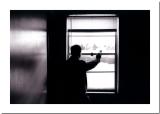
In Billy Budd, between Claggart and Vere, the taboo is mutiny; yet Britten and librettist Foster, as well as the novelist Herman Melville saw the real unspeakable is inhibited sexuality.
Showing posts with label gay. Show all posts
Showing posts with label gay. Show all posts
Sunday, May 13, 2007
The unspeakable


Monday, February 26, 2007
The damaging love

Is it true that every Chinese son is born to meet his parents’ requirements? Is it true that the tradition still holds that sons are part of the property of the family while the head of the family dictates their usage? For every Chinese gay man, how to bear with the notion that no descendant is No. 1 sin against filial respect?
Those are the questions that have arisen to me before I watched the movie “Sunflower”. Unfortunately, the movie makes these questions more imminent and relevant than ever, yet leaving them unsolved.
Zhang Yang has never tired of exploring father-son relationship. In “Shower”, such exploration serves as the footnote of fast-changing society; in his new movie “Sunflower”, the relationship comes to the center of the stage and the panorama of modernization provides the necessary elements for enduring conflicts and tensions between father and son.
It would be interesting to wonder how much his own experience has been woven into the film when the director, son of film director Zhang Huaxun, tells a story of a son who is taught to continue his father’s career as a painter, not without a struggle or even hatred. In fact, probably every Chinese at the age of late 20’s or early 30’s can easily collect some resemblance from their past: Those parents belong to the time when political disasters mashed their opportunities and trashed their youth. Through the next generation, they find the way to resume their dreams: For them, sons are what they were NOT but what they once wished to be. With fervent obsession they provide the most seemingly unselfish, sacrificing love to achieve the most selfish goal. The thirst for total control soon leads to consequent struggles between the relationships. They seldom win, or to some extent, they will never since sooner or later sons will break up the attachment to live by their own.
Such stories are no new. Back to the 18th century, with his incessant guidance Leopard Mozart brought a child prodigy to astonish the world, yet such a distorted relationship delayed the pace of mental growth of young Mozart and extended Wolfgang’s childhood well into his adult years. But unlike the western countries where young people are encouraged to live independently after eighteen years old, there is no specific time frame to end mental breastfeeding in China. Filial piety is tied with other virtues as the highest rank in an ethnic pyramid. Such filial piety is further transformed into filial obedience, so that no matter for what reason a son might rebel, what he faces is not just his father, but also the social standard against which arise the guilty feeling.
Luckily my growing pain was not as drastic as in the movie. I excelled in schools and made little trouble. My parents were only temporarily displeased when I chose not to become a physician. (“Who is going to read those medical books in the house” was their only comments.) But when I watched the father scolding his son vehemently and saying” Why can’t you have a child FOR US”, it immediately reminded me of those silent moments when my dad, on the other side of the earth, typed in the chat window: “Please find a girl friend, OK? I beg you!” There is no “for us” in the end of the sentence, but the word “beg”, like an edged blade, not only pieced their self-esteem apart, but also left me helpless drowning in my consciousness of filial disobedience guilt.
In Sunflower, there is not much as answered as the tension resolved. In the end, the father opens up to tell the grow-up story from his own point of view as if to deliver his last relay. Then he abruptly leaves the family, maybe he realizes that he succeeds and fails at the same time: He does see his unaccomplished mission fulfilled through his son’s hands, but at the price of being alienated and unforgiven.
Being invisible or at least being remote.
That’s the father’s final answer to keep the harmony within the family. Sadly, that’s what most of Chinese gay men’s strategy in response to family obligation. For them, life is somewhere else. Being away from where you grow up, whom you have known for long and what you have being used to is placebo for temporary relief, yet there is no cure in the end. For there is a famous Chinese saying: No one could ever return the same amount of love that he’s received from parents. That’s how the cruel reality differs from the movie. After year’s paternal love, whether unselfish or overwhelming, a father can leave his son without self-condemnation. Yet as a son, such internal struggles never cease, even at the end of the world.
Those are the questions that have arisen to me before I watched the movie “Sunflower”. Unfortunately, the movie makes these questions more imminent and relevant than ever, yet leaving them unsolved.
Zhang Yang has never tired of exploring father-son relationship. In “Shower”, such exploration serves as the footnote of fast-changing society; in his new movie “Sunflower”, the relationship comes to the center of the stage and the panorama of modernization provides the necessary elements for enduring conflicts and tensions between father and son.
It would be interesting to wonder how much his own experience has been woven into the film when the director, son of film director Zhang Huaxun, tells a story of a son who is taught to continue his father’s career as a painter, not without a struggle or even hatred. In fact, probably every Chinese at the age of late 20’s or early 30’s can easily collect some resemblance from their past: Those parents belong to the time when political disasters mashed their opportunities and trashed their youth. Through the next generation, they find the way to resume their dreams: For them, sons are what they were NOT but what they once wished to be. With fervent obsession they provide the most seemingly unselfish, sacrificing love to achieve the most selfish goal. The thirst for total control soon leads to consequent struggles between the relationships. They seldom win, or to some extent, they will never since sooner or later sons will break up the attachment to live by their own.
Such stories are no new. Back to the 18th century, with his incessant guidance Leopard Mozart brought a child prodigy to astonish the world, yet such a distorted relationship delayed the pace of mental growth of young Mozart and extended Wolfgang’s childhood well into his adult years. But unlike the western countries where young people are encouraged to live independently after eighteen years old, there is no specific time frame to end mental breastfeeding in China. Filial piety is tied with other virtues as the highest rank in an ethnic pyramid. Such filial piety is further transformed into filial obedience, so that no matter for what reason a son might rebel, what he faces is not just his father, but also the social standard against which arise the guilty feeling.
Luckily my growing pain was not as drastic as in the movie. I excelled in schools and made little trouble. My parents were only temporarily displeased when I chose not to become a physician. (“Who is going to read those medical books in the house” was their only comments.) But when I watched the father scolding his son vehemently and saying” Why can’t you have a child FOR US”, it immediately reminded me of those silent moments when my dad, on the other side of the earth, typed in the chat window: “Please find a girl friend, OK? I beg you!” There is no “for us” in the end of the sentence, but the word “beg”, like an edged blade, not only pieced their self-esteem apart, but also left me helpless drowning in my consciousness of filial disobedience guilt.
In Sunflower, there is not much as answered as the tension resolved. In the end, the father opens up to tell the grow-up story from his own point of view as if to deliver his last relay. Then he abruptly leaves the family, maybe he realizes that he succeeds and fails at the same time: He does see his unaccomplished mission fulfilled through his son’s hands, but at the price of being alienated and unforgiven.
Being invisible or at least being remote.
That’s the father’s final answer to keep the harmony within the family. Sadly, that’s what most of Chinese gay men’s strategy in response to family obligation. For them, life is somewhere else. Being away from where you grow up, whom you have known for long and what you have being used to is placebo for temporary relief, yet there is no cure in the end. For there is a famous Chinese saying: No one could ever return the same amount of love that he’s received from parents. That’s how the cruel reality differs from the movie. After year’s paternal love, whether unselfish or overwhelming, a father can leave his son without self-condemnation. Yet as a son, such internal struggles never cease, even at the end of the world.
Subscribe to:
Posts (Atom)